Secretary of State Hillary Clinton departed the State Department with the legacy of a largely successful mission to restore the US image abroad through relentless values driven global diplomacy.
The Secretary’s intense approach aimed to reconnect with the rest of the world and to redefine American values amidst a shift in US foreign policy. Rather than merely chastising rouge and unfriendly states, she sought to embrace the local human rights activists and civil society that fight for equality, freedom of speech, and democratic ideals. She reached out to those who understood the struggle first hand and, when possible, helped to shield them from the repressive regimes they defy. The emphasis was on quantity, as evident by the near 950,000 miles and 81 days she spent in the air to travel across the globe as the Secretary of State, which was perhaps more than any other individual, politician or not, during that timeframe. Her eight-a-day meetings with civic activists, international organization chiefs, and high government officials overshadowed her role in major global conflicts, a function she sought to avoid for reasons that will likely be clearer in the future.
Often she was visibly exhausted and would immediately jump from meetings and speeches to a government plane that would get her and her team to the next international conference. Her plan was ambitious, and while hard to measure and evaluate, few would say that she was not successful at what she set out to do. The State Department can lay claim to some major achievements during her tenure. Not least for the support granted to human right advocates and detained dissidents, the expanded role of civil society in international forums, an improved standing for women in places where they are marginalized, and the empowerment of minority voices across homogenous societies. The international community, philanthropists, and grant makers would do well to capitalize on the positive inertia that has instilled a more grassroots and localized approach in US foreign policy to reform, transitional democracy, and public diplomacy.
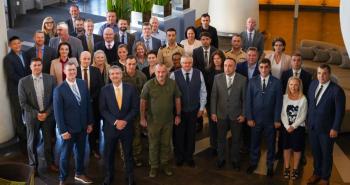
The Jefferson Institute is proud to have implemented eleven of these gatherings under Secretary Clinton with activists and top government officials in international forums where civil society participation, side by side with state representatives, is often nothing short of ground breaking. In just the last year, our efforts took us to Addis Abeba, where we brought together Disabled Persons Organizations from across Africa to discuss the Continental Plan of Action and advocate for the rights of the disabled. We were in Geneva, where we gathered youth activists from around the world to brainstorm recommendations to the youth unemployment crises at the UN’s International Labor Conference. We facilitated the first US sponsored conference on LGBT rights on foreign soil in Tirana, and most recently, we were in Tunisia to support human rights activists from the broader Middle East region to discuss challenges, constraints, and opportunities that NGOs throughout the region face in advocating for democratic values in their transitional societies.
Our experience maneuvering through the complex and often contradictory web of politics, protocol and logistics that inevitably wraps these international settings was a largely positive one. We relished working with leading human rights advocates, educating youth activists in media tactics, and enhancing the civil society networks that strive to reform their societies and guide them through transitions. The job is not complete, and may never be, but we have embraced this bottom-up grassroots approach to international development as not merely a tactical means, but a strategic values based objective in itself.